The spinning top is a small wooden piece shaped like a cone with two ends: one wide and one pointed. Its size is smaller than a fist. A nail is fixed at the pointed end to act as its axis during spinning.
1. The regular top
2. The Na‘our top
3. The Mughol top
The top is always mentioned along with the "Mishbal." The Mishbal is a thread about one meter long, wound around the top starting from the nail up to the top. Its other end is tied to a small piece of wood or iron, held between the little finger and ring finger. The player throws the top, which lands on its nail and spins alone, while the Mishbal remains hanging between the fingers. It is a fun and entertaining game played by boys individually or in organized groups. One of its variations is called "Al-Fallous." In this version, one boy places his top on the ground as a target, and the others try to pierce it with the nails of their tops. The piercing is called "Anboob." If a player misses, he must catch his spinning top using the Mishbal; otherwise, his top is exposed to piercing. Some boys show off by making the top spin in their hands. The best tops are called "Al-Zakeed," which hum while spinning.
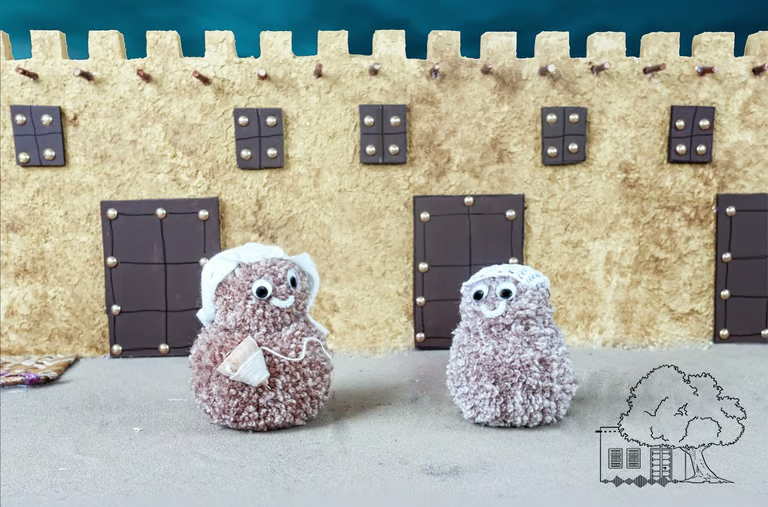
Muqsi is a fun group game played by boys during the day. It includes:
1. The Muqsi: a wooden piece pointed at both ends, about 15 cm long and 3 cm thick.
2. Al-Matta‘ah: a thick stick, about 60 cm long.
3. Al-Koor: a horizontal hole in the ground the length of the Muqsi.
4. Al-Sheesh: a line drawn on the ground near the Koor.
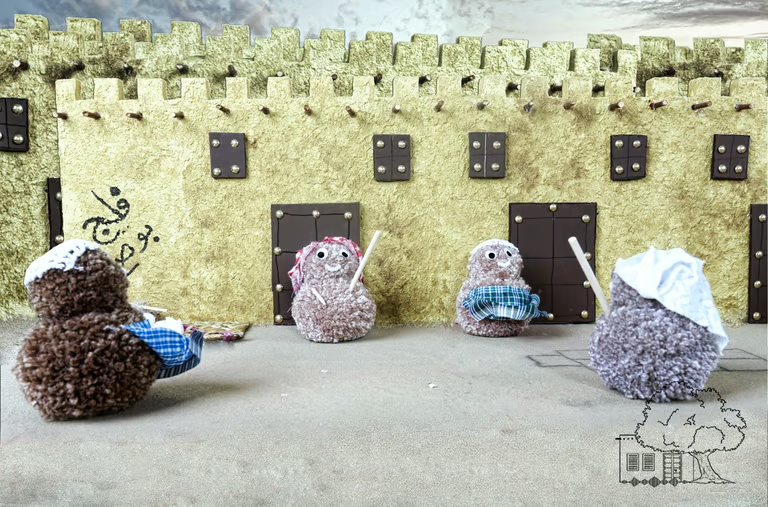
Players are divided into two teams, and a draw decides which team starts. The leader throws the Muqsi away from the Koor, then asks a member of the other team to choose a word ("Allah" or "Sayfah"). He flips the Matta‘ah along the ground from the Koor toward the Muqsi, saying "Ya Allah" the first time and "Ya Sayfah" the second. If the chosen word matches when the stick touches the Muqsi, that team wins the turn. The winning team places the Muqsi in the Koor with one end raised, then strikes it lightly with the Matta‘ah to lift it into the air. Before it falls, the player strikes it again to send it flying. The opposing team members, spread out in the area, try to catch it in their hands or clothing. If caught, they score a point. If it lands on the ground, the nearest player throws it toward the Matta‘ah placed on the Koor. If it hits without touching the Koor, they score a point; if not, they lose a point. Every three points are called a "Ruh" (spirit). Boys say "Bu two Ruhs" or "Bu three Ruhs." The opposing team must defeat the winners by eliminating all their Ruhs. A variation called "Al-Ma Tou‘" is played without digging a Koor, striking the Muqsi directly from the hand. Another related game involves spinning the "Bulbul" (a type of top) using a stick and thread. The Bulbul spins while being struck repeatedly, producing humming and whistling sounds. The more it hums, the more valuable it becomes among the boys. This game has now disappeared completely.
As known among Kuwaitis, Al-Kafoud is the palm frond stick after being stripped of its leaves and thorns. The stick is straight at the beginning and curved at the end, with a wide tip. It was used as a fun toy for children, and some decorated it creatively. A child would bend it, tie its ends with a strong thread to increase the curve, then attach scraps of colored fabric along the thread. Some tied a small stick at the top called (Al-Sikan) and another at the bottom, connecting them with decorative threads. This created a colorful shape that the child held from the upper stick, proudly parading it through the streets.
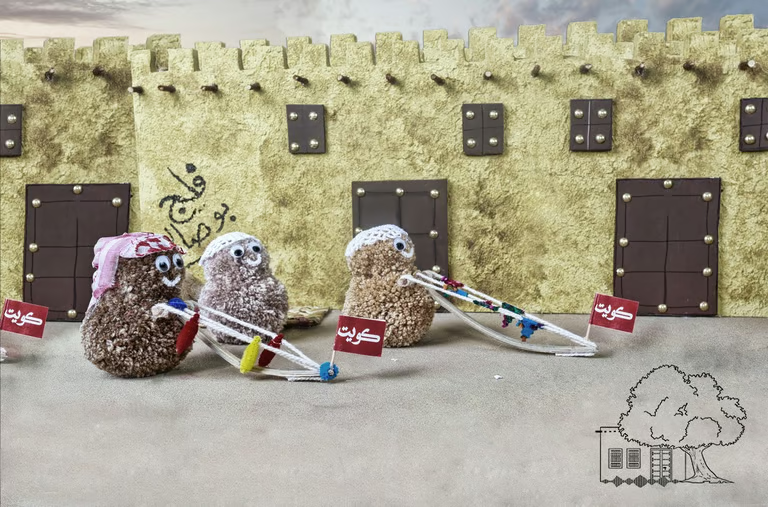
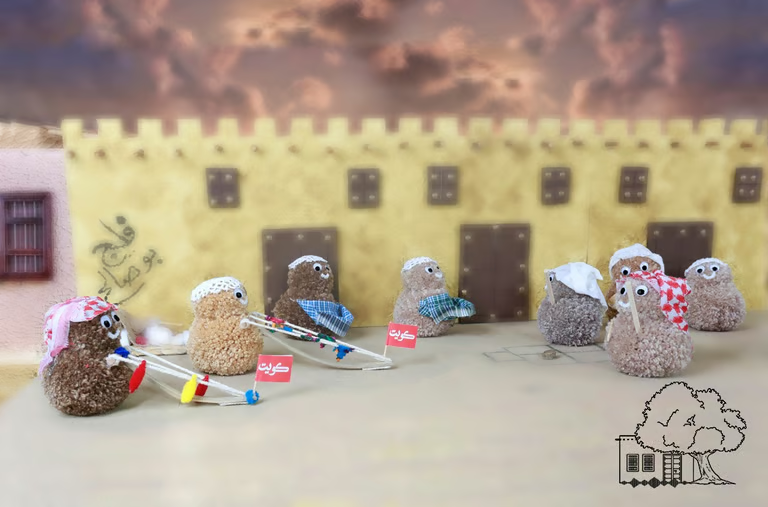
Darbahah is a circular frame originally used for bicycle wheels. The name comes from the Kuwaiti dialect word "to roll" (yitdarbah), meaning anything that rolls on the ground. Boys used sticks to push and guide the Darbahah in any direction. Some used strong wire (Sim Bir), twisted around the frame, so when pushed forward, the Darbahah rolled smoothly. It gave boys the same excitement as owning a car or bicycle today. They often raced their Darbahahs over a set distance, and some tried to knock over their friends’ Darbahahs to show superiority.
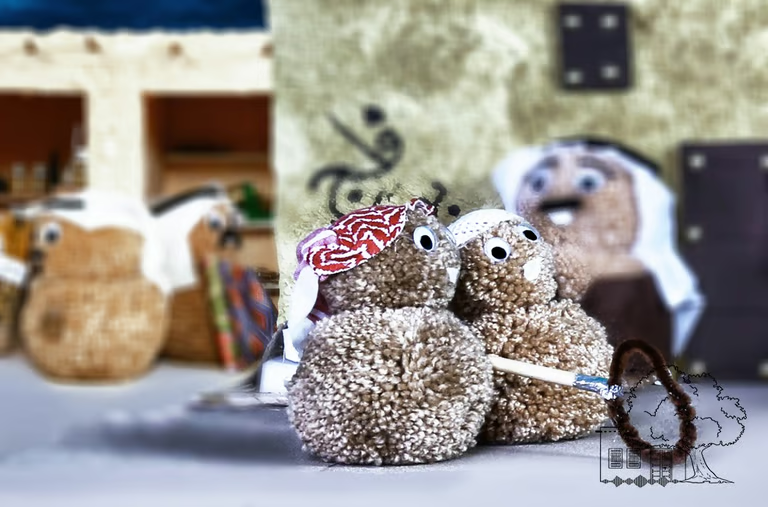
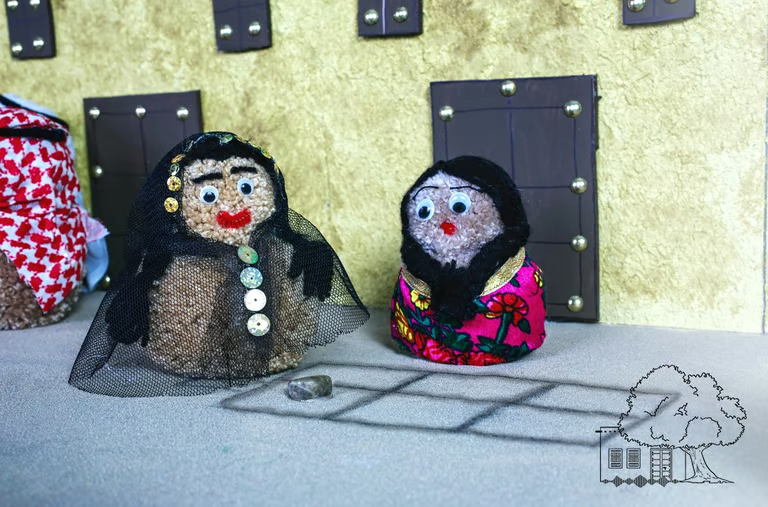
Hila is a game played by two or more girls in multiple stages. A rectangle is drawn on the ground and divided into six squares (houses). The player stands at the first square holding a flat stone or pottery piece called (Al-Rabazah), while her opponent waits outside. The player throws the Rabazah into the first square, hops on one foot to push it into the next square, and continues through all six squares without stepping on the lines or using both feet. If she fails, her turn ends and the other girl plays. In later rounds, she throws the Rabazah into the second, third, and subsequent squares, repeating the hopping sequence. After completing all squares, she stands with her back to the grid and throws the Rabazah randomly. If it lands in a square, she claims it and can step on it with both feet during play. The game continues until all squares are claimed, then restarts with friends taking turns.